From Photojournalism to Personal Projects
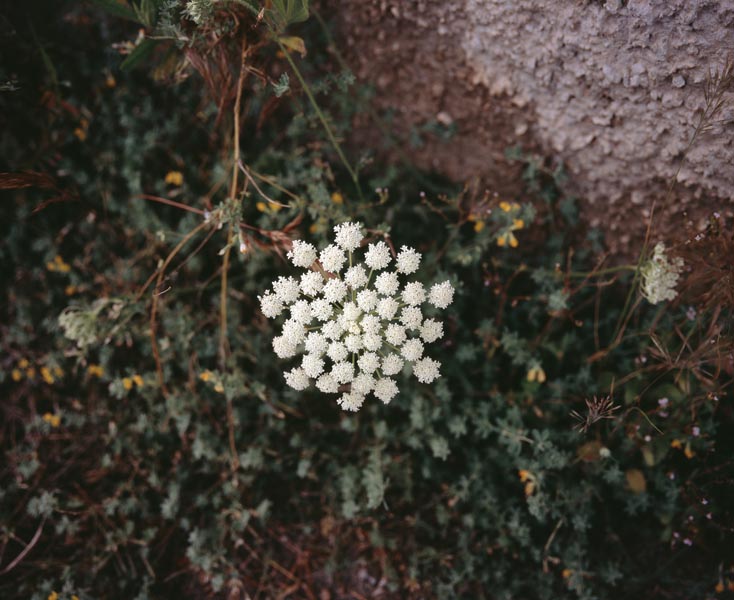
I began my professional life as a photojournalist for the Menorcan newspaper Última Hora, moving through towns and coastlines with a camera that answered to the rhythm of the news. Years later, based in the Basque Country, I work almost exclusively on long-term personal projects (landscape, territory, memory), using a 4×5 large format camera on color slide film. The shift from daily journalism to slow documentary work was not a clean break. It was a gradual reorientation of the same question: What can a photograph describe honestly, and on what timescale?
The rhythm of the news:
Photojournalism operates on urgency. An assignment arrives; you read the place quickly; you respond before the moment passes. That rhythm teaches skills personal work still depends on, recognizing structure in a scene, understanding how light carries meaning, knowing when a frame is sufficient and when it is evasive. In Menorca, working for Última Hora, I learned to move through familiar territory with professional attention, not tourist curiosity.
But the news also imposes a grammar: event first, context second. The photograph must conclude. A personal project, by contrast, refuses conclusion. It asks you to return (to the same barracks, the same quarry, the same island, in a different season) until the place reveals a condition rather than an incident. I did not leave photojournalism because I stopped caring about what was happening in the world. I left because the questions that mattered to me required a duration the newspaper could not accommodate.
Living and working later in the United States, Germany, and China extended that understanding. Each country offered a different scale of territory and a different relationship to observation. Travel, in those years, was still largely responsive, places encountered, situations read, images made within the limits of available time. Personal projects inverted part of that logic: the place sets the duration, not the assignment.
What daily photography taught me:
Daily photography taught me to read a place under pressure, to distinguish what is structurally important from what is merely dramatic. That discipline survives in my landscape work. When I photograph managed water infrastructure in Just Water, or an engineered river in Taiyuan, I am still looking for the fact embedded in the scene, not the emotion imposed on it.
It also taught me ethics at speed: what a frame claims, what it cannot claim, when proximity becomes intrusion. Those questions reappear in Lonely Bush, a project that acknowledges a historical moment I lived through, without pretending to report from it. The work does not illustrate the news. It describes isolation and parallel reading: a condition observed in landscape, rather than a headline translated into symbol.
Formal training reinforced what the newspaper had begun. At EFTI in Madrid, I completed a Master's degree in Photography. A European Union scholarship took me to Southern Germany. Photo España workshops with Paul Graham, Eduardo Momeñe, Nadav Kander, and Cristina García Rodero placed my early practice in conversation with photographers who understood documentary work as a long commitment, not a single decisive frame. None of that removed the habits of daily journalism overnight. It gave me language for what I was already moving toward.
When the headline is not enough,
the headline resolves. Personal work, at its best, holds complexity open. S'Enclusa was where I first understood that difference in practice. The abandoned military base on Menorca offered no daily event, only gradual transformation, vegetation overtaking structures built for control. A news photograph would seek the emblematic ruin, the readable symbol of abandonment. The project I made instead required returning across months, observing an equilibrium between architecture and growth that shifted slightly each visit.
That work, completed in 2009 as a series of sixteen photographs on color slide film, became the template for what followed. Each title names a plant in the image, in Latin and in Menorquín, acknowledging that the living element was subject, not decoration. The method was slow, typological at first, then increasingly attentive to landscape as a field of change. Urgency did not produce those images. Duration did.
When the headline is not enough, the photographer must choose a different contract with the viewer. Not: This happened today. Rather: This condition persists; look until you see it. Documentary observation, in my personal projects, replaces the news cycle with return, sequence, and restraint.
Landscape as the primary language:
Daily news photography often inverts the order, person and event first, environment as context. Personal documentary work, for me, restores landscape as the primary language. That restoration is most visible in Andalucía, where figures encountered on location integrate into the frame without dominating it. The landscape organizes the image; the portrait arrives as coexistence, not as subject extracted from place.
Landscape, in this sense, is never purely natural. It carries use, memory, policy, absence. Quarries describe extraction. Closed Island describes seasonal pause. Origen describes peripheral housing before arrival. The subjects differ; the grammar is shared. Territory observed over time, photographed with the patience daily journalism rarely allows.
I do not present this shift as superiority: landscape over event, slowness over speed. Both modes answer to different needs. I describe it because the work on this site belongs to the second mode, and its origins in the first are visible in how the frames are constructed: attention to fact, skepticism toward illustration, respect for what the image can honestly claim.
Personal work on large format film.
The instrument completed the transition. A 4×5 camera cannot operate in news rhythm. Each exposure on color slide film is finite, perspective, depth, color balance decided before the shutter releases. Personal projects and large format align naturally: both require staying until the frame is right, not until the deadline passes.
All the work on this site was produced that way, color slide film, digitized at maximum resolution, prints conceived at approximately 120 × 100 cm. The scale matters. Personal documentary photography, for me, is not an archive of small observations. It is work intended to be entered slowly, at a physical size that preserves the surfaces the camera recorded. Photojournalism taught me to see quickly. Large format taught me to see completely.
If you are moving from assigned work toward personal projects, you do not need to reject what the earlier rhythm gave you. Read places under pressure, then return without pressure. Ask what a landscape holds when no headline requires you to finish. Let the duration of the project match the duration of the condition you are observing. The camera may change; the obligation to honesty should not.
Manuel Pinar