Why Returning to the Same Landscape Changes Your Photography
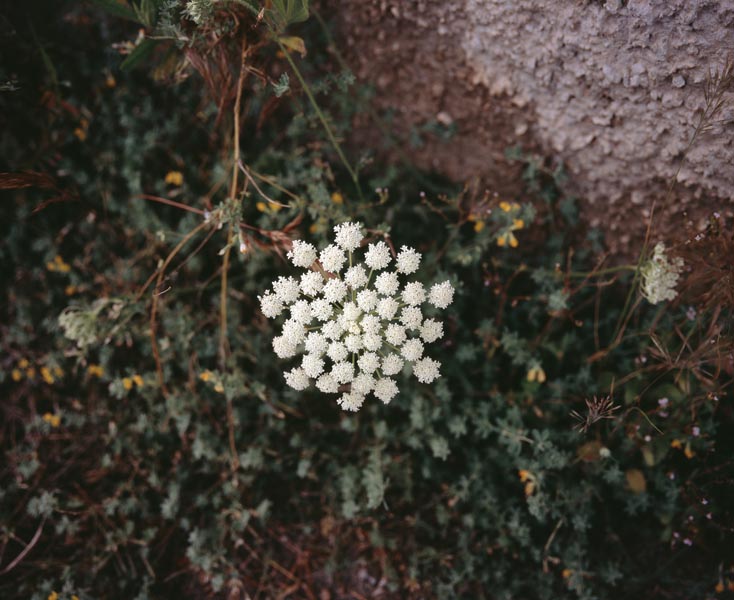
There is a common idea in photography that the decisive moment happens once; that you arrive, you see, you expose, and the work is done. I understood that rhythm early, working as a photojournalist in Menorca. The news demands immediacy. But when I began making personal landscape work at S'Enclusa, I learned something different: the decisive moment, if it exists at all in this kind of practice, is spread across many visits. Returning to the same landscape changed not only what I photographed, but how I see.
The first visit vs. the tenth
The first time I walked into S'Enclusa, the site announced itself through what was still visible, fences, barracks, surfaces built for control. I photographed those forms because they were what I recognised. The frame felt complete. It was only on later visits that I noticed how incomplete my first reading had been. Walls I had considered static were being altered by growth I had not yet learned to name. Paths had shifted. Light entered the same structure differently in March and in September.
By the tenth visit, I was no longer looking for the site. I was looking at a process. The difference between the first exposure and the tenth is not simply better pictures; it is a different relationship to place. The landscape had not changed dramatically between those visits, but my capacity to read it had. That is why I continue to return to territories I have already photographed: not to repeat myself, but to allow the place to outgrow my first interpretation.
What repetition reveals
Repetition strips away the obvious. The first photograph of any location often illustrates what the place is supposed to look like: the readable symbol, the expected angle. When you return, those symbols recede. You begin to notice secondary structures: how vegetation negotiates with concrete, how shadow defines a surface more honestly than direct light, how absence organises a frame as much as presence.
At S'Enclusa, repetition moved my work from a typology of barracks toward a landscape in which plants became the dominant language. I would not have reached that shift in a single day. It required seeing the same wall at different hours, in different seasons, until the architecture and the growth ceased to compete and began to share the image equally. Repetition did not produce variation for its own sake. It produced clarity.
Menorca as a working territory
Menorca is not a backdrop in my work; it is a territory I know through use. I began my professional life on the island, and that history informs how I move through it. When I photograph S'Enclusa or the paused landscapes of Closed Island, I am not discovering Menorca as a traveller would. I am continuing a conversation with a place that already carries professional and personal memory.
That familiarity is an advantage and a risk. The advantage is access to nuance: I know when the island empties, when light hardens, when certain paths are passable. The risk is assumption, believing you already know what is there. Returning repeatedly forces me to test those assumptions. The site I thought I understood on Monday is not quite the same site on Friday. Working territory, in this sense, means accepting that knowledge of a place must be renewed, not accumulated once and filed away.
Slow 4×5 observation
Large format film enforces return. Each sheet is expensive in time, setting the camera, measuring light, waiting for conditions, deciding whether the frame justifies the exposure. You cannot exhaust a place in an afternoon and feel that the work is finished. The 4×5 camera asks you to stay until the frame earns its place on the film.
That slowness aligns with repeated visits. On colour slide film, each decision about perspective and tonal range is final. There is no safety net of rapid bracketing. When I return to a site with the large format camera, I am not hunting for novelty. I am refining an observation I could not fully resolve last time: a branch that has grown into the frame, a wall that now reads differently against the sky. Slow observation and return are not separate methods. They are the same discipline applied across time.
When the project ends
A long-term project does not end when you run out of subjects. It ends when the place stops asking new questions: when further visits would repeat answers you already have. At S'Enclusa, the series grew to sixteen photographs over repeated seasons. I knew the work was complete not because I had photographed everything, but because each new visit confirmed rather than extended what I had already understood.
Ending a project of return is difficult because the landscape itself never truly ends. Vegetation continues. Structures continue to decay. But the photographer's question can reach its limit. When that happens, the body of work stands as a record of sustained attention, not a definitive account of a site, but an honest interval of looking. That interval is what I try to offer in the S'Enclusa series, and what I explore further in Why I Photographed the Enclusa Project.
If there is a lesson I would carry to other landscapes (quarries, rivers, peripheral cities) it is this: the first visit opens the question. The returns write the answer. Photography that depends on a single encounter often illustrates a place. Photography built on return can begin to describe how a place behaves over time. That distinction has shaped everything I have done since Menorca.
Manuel Pinar